How to Set Up a Food Quality Assurance System in a Small Lebanese Food Factory
By Anthony Abi Nader, Food Technology Consultant at Umami Plus. Hands-on food R&D and manufacturing experience across Lebanon, Africa and the MENA region, from formulation and factory commissioning to HACCP and quality systems.
Quick answer: To set up a food quality assurance (QA) system in a small Lebanese food factory, follow seven steps: (1) define your scope and appoint a QA owner, (2) establish basic hygiene and GMP programs, (3) control suppliers and incoming materials, (4) run a HACCP study to find and control hazards, (5) set product specifications and in-process checks, (6) put traceability, labeling and allergen controls in place, and (7) document everything, train your team, and verify the system through audits. A small factory can build a working system step by step, and certification such as ISO 22000 can come later.
Why a QA system matters for small food factories
A small factory often runs on the experience of one or two people who "just know" how the product should look, taste and behave. That works until the owner is away, a key ingredient changes, production doubles, or a customer or export market asks for documented proof of control.
A QA system turns that personal knowledge into written, repeatable procedures. In practice it helps you:
Reduce the risk of unsafe products and costly recalls
Keep taste, texture and weight consistent from batch to batch
Cut waste, rework and customer complaints
Win retail, distributor and export customers who require documented systems
Make the business less dependent on any single person
QA vs. QC: what's the difference?
The two terms are often mixed up, and the difference matters when you design your system.
Quality Control (QC) checks products: testing pH, measuring temperature, inspecting packaging, weighing finished goods. It finds problems.
Quality Assurance (QA) builds the system that prevents problems: procedures, training, supplier approval, hygiene rules, records and audits.
A factory with only QC is checking for mistakes after they happen. A factory with QA is designed to avoid them. You need both, but QA is what makes quality repeatable.
Step 1: Define your scope and appoint a QA owner
Start by writing down what the system covers: which products, which production lines, which sales channels (local retail, foodservice, export), and which customer requirements apply.
Then name one person responsible for quality. In a very small factory this may be the owner or production manager at first, but the role should have clear authority to stop production or hold a batch if something is wrong. Where possible, quality decisions should not be made only by the person under pressure to ship.
Also confirm your legal requirements early. Licensing, labeling and hygiene rules involve several authorities in Lebanon, so check current requirements with the relevant ministries and with LIBNOR for applicable standards, rather than relying on old information.
Step 2: Establish basic hygiene and GMP programs
Before HACCP, you need strong foundations, often called prerequisite programs or Good Manufacturing Practices (GMP/GHP). Most food safety failures in small factories start here, not in advanced technical areas.
Cover at least these areas:
Premises and layout: separate raw and finished product flows, and keep raw materials, packaging and waste areas apart
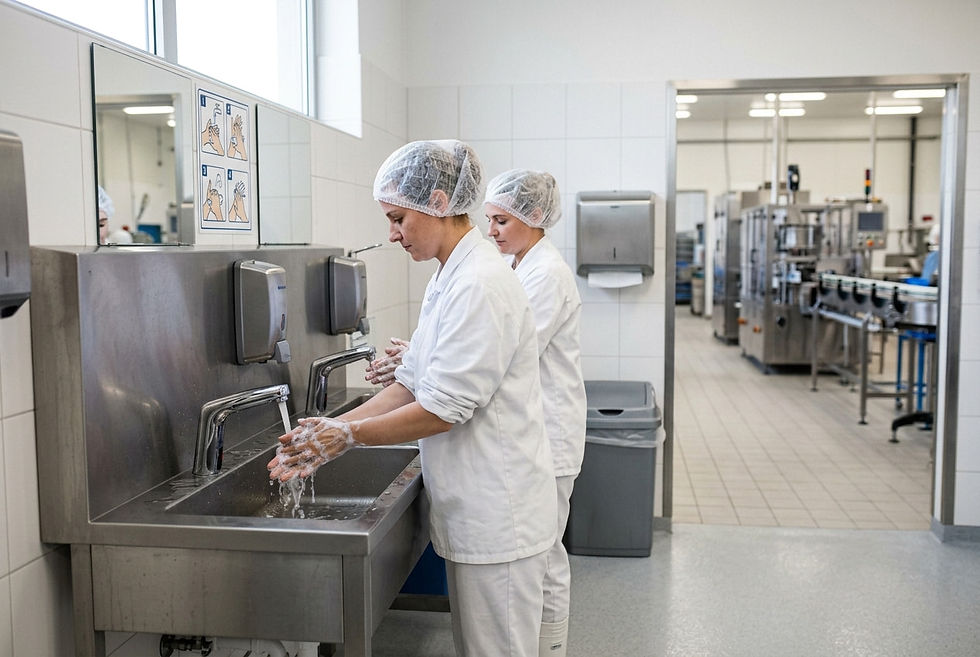
Personal hygiene: handwashing, protective clothing, illness reporting, visitor rules
Cleaning and sanitation: written schedules, approved chemicals, and checks that cleaning actually worked
Pest control: a documented program, ideally with a contracted provider, and regular inspection
Water: know your water source and storage, keep tanks clean, and test regularly
Maintenance and calibration: keep equipment in good condition, and calibrate thermometers, scales and pH meters
Waste management: clear handling that does not create contamination risk
Many Lebanese producers face unstable electricity and rely on generators. Plan for this: know what happens to your product if power drops during heating, cooling, storage or fermentation, and write down what to do.
Step 3: Control suppliers and incoming materials
Your product is only as safe and consistent as what comes in the door. Ingredient supply can change quickly, and switching suppliers for price or availability is common, so a clear process protects you.
Keep an approved supplier list and approve new suppliers before first purchase
Write specifications for each key ingredient and packaging material
Ask for certificates of analysis or conformity where relevant
Inspect on receipt: check condition, temperature, labels, seals, expiry dates and cleanliness of the truck
Store correctly, using FIFO or FEFO (first in or first expired, first out), with clear labels and no contact with the floor
Quarantine doubtful materials until they are checked
If you change an ingredient or supplier, test it on a small trial first. A different oil, flour or sesame source can change texture, flavor or shelf life even when it looks the same.
Step 4: Run a HACCP study
HACCP (Hazard Analysis and Critical Control Points) is the core of food safety management. It means systematically asking what can go wrong in your process, and controlling the steps where it matters most.
A practical sequence:
Form a small team that knows the product and the process
Describe each product, its ingredients, intended use and storage
Draw a process flow diagram from receiving to dispatch and verify it on the factory floor
Identify hazards at each step: biological (such as Salmonella), chemical (such as cleaning agents, allergens) and physical (such as metal or glass)
Decide which steps are critical control points (CCPs), where a control is essential to prevent or eliminate a hazard
Set critical limits (for example, a minimum temperature and time for heat treatment)
Define monitoring: who checks, how, and how often
Define corrective actions for when a limit is missed
Plan verification and keep records
Remember that HACCP is specific to each product and process. Copying another factory's plan rarely works, and an unrealistic plan that nobody follows is worse than a simple one that people use.
Step 5: Set product specifications and in-process controls
Safety is only half of quality. Customers also expect consistent taste, appearance and performance.
Write a specification for every product: ingredients, key parameters, sensory description, packaging, shelf life
Choose the critical parameters you will measure, such as pH, Brix, moisture, water activity, viscosity, temperature, fill weight or seal integrity, depending on the product
Decide how often to sample and what limits trigger action
Define release criteria: what a batch must meet before it can be shipped
Keep retained samples of each batch for the shelf life, so you can investigate complaints
You don't need a full laboratory at the start. Basic in-house tests plus an external laboratory for microbiological and chemical analysis is a realistic model for many small factories.
Step 6: Put traceability, labeling and allergen controls in place
Traceability. Give every batch a lot code and record which ingredient lots went into it and where the finished lots went. Test it with a mock recall: pick a finished product and see whether you can trace everything back and forward within a few hours.
Labeling. Check that labels match the actual recipe, declare allergens correctly, and meet the requirements of the market you sell in. Review labels again every time a recipe or ingredient changes.
Allergens. Identify which allergens you handle (for example sesame, nuts, milk, gluten), prevent cross-contact through scheduling, cleaning and separation, and train staff to understand why it matters. For sesame and tahini-based foods in particular, make sure allergen controls are clear.

Step 7: Document, train, verify and improve
A system that exists only in people's heads can't be audited or taught. A system that exists only on paper is just as useless. Aim for simple procedures people actually use.
Documents: short SOPs, clear forms, controlled versions, kept where staff can use them
Records: fill in forms at the time of the activity, not at the end of the week
Training: train every employee on their own tasks and on basic hygiene, and keep training records
Internal audits: check regularly whether practice matches procedures
Complaints and corrective actions: record every complaint, find the root cause, fix it, and confirm the fix worked
Management review: review results at least once a year and decide what to improve
Once the system runs reliably, you can consider certification, such as ISO 22000 for food safety management or ISO 9001 for quality management. Certification is usually driven by customer or export requirements and should follow a working system, not replace it.
Common mistakes to avoid
Writing documents for the auditor, not for the factory. Procedures nobody follows create risk instead of reducing it.
Skipping the basics. Advanced HACCP on top of poor hygiene doesn't protect you.
Giving quality to someone with no authority. A QA person who can't hold a batch is a record keeper, not a controller.
Changing ingredients or suppliers without testing. Small changes can have large effects on safety and quality.
Not calibrating instruments. A wrong thermometer gives false confidence.
Treating the plan as finished. Systems must be reviewed when products, equipment or suppliers change.
How long does it take, and what does it cost?
Timelines and costs depend on the factory's starting point, size, product risk and market requirements, so any fixed number would be misleading. As a general guide, a small factory with reasonable hygiene can build a basic working system over a few months, and certification adds more time on top. The biggest cost is usually not paperwork but fixing facilities, training staff and making routine checks part of daily work.
Frequently asked questions
What is the first step in setting up a food quality assurance system?
Define your scope (which products and processes are covered) and appoint a person with real authority to be responsible for quality. Then build your hygiene and GMP foundations before moving to HACCP.
Do I need ISO 22000 to sell food in Lebanon?
Certification is usually requested by customers, retailers or export markets, rather than being the starting point. Whatever certification you pursue, your factory still has to meet the legal licensing, hygiene and labeling requirements, so confirm them with the relevant Lebanese authorities.
What is the difference between HACCP and ISO 22000?
HACCP is a method for identifying and controlling food safety hazards. ISO 22000 is a management system standard that includes HACCP principles and adds requirements for management, communication, resources and continual improvement. HACCP is often the practical starting point.
Does a small food factory need its own laboratory?
Not necessarily. Many small factories combine basic in-house checks (such as temperature, pH, Brix and weight) with an external laboratory for microbiological and chemical testing.
Can a small factory do this without a consultant?
Some can, especially with strong internal expertise. A consultant is most useful when you need to build the system faster, design a HACCP plan for a complex product, prepare for certification, or solve a specific safety or quality problem.
Need help building your quality system?
Umami Plus helps food manufacturers across Lebanon with food safety and quality systems, HACCP, ISO 22000 and ISO 9001 preparation, process control, and product development from concept to commercial production. Tell us about your factory and we will help you decide where to start.

Comments